Customers frequently searched for:




Retinol Top-Rated Set
- Regular Price
- Starting at €316.00
- Asking Price
- Starting at €316.00
- Regular Price
-
€346,00

Retinol Serum – Benefits, How to Use It, and Which Ones Are Best for Beginners and Experts
Here, you'll learn how retinol works, how to use it correctly, and which retinol serum is right for your skin—from a gentle starter formula to a high-potency, high-performance option.
What is retinol?
Retinol is a fat-soluble vitamin A derivative and belongs to the group of substances known as retinoids. Chemically speaking, it is an active form of vitamin A that plays a role in numerous biological processes in the human body. Since the body cannot produce retinol on its own, vitamin A must be obtained through the diet, for example from carrots, eggs, or other foods rich in vitamin A.
However, when it comes to skincare, retinol can be used in a much more targeted and controlled way: through a retinol serum. A retinol serum allows for precise dosing, even distribution across the face, and better adaptation to different skin types and needs. This enables retinol to act locally where it’s needed and to deliver its anti-aging benefits in a targeted manner—from a gentle introduction to intensive use.

How does a retinol serum affect the face and eye area?
In the skin, retinol is gradually converted into its biologically active form, thereby influencing various key skin functions:
- Cell Renewal: Stimulates cell turnover and supports skin regeneration for a fresher complexion.
- Collagen metabolism: Stimulates collagen production in the dermis and helps improve firmness and elasticity while reducing wrinkle depth.
- Lightening of Pigment Spots: Regulates melanin production and can visually lighten pigment spots as well as prevent their formation.
- Neutralizing Free Radicals: Helps neutralize free radicals that would otherwise contribute to cell damage and premature skin aging.
- Sebum-regulating effect: Helps maintain balanced sebum production and makes pores appear smaller.
- Exfoliating properties: Has exfoliating effects that can help prevent blemishes and contribute to a clearer complexion.
- Accelerates scar healing: Promotes skin regeneration and can increase the skin's resilience.
Retinol doesn't just work on the surface; it also penetrates deeper layers of the skin. As a result, its anti-aging effects unfold over a longer period of time. With consistent use of our retinol serum, the first visible changes appear after several weeks to months—across the entire face and even in the sensitive eye area.
What are the benefits of a retinol serum for the face and eye area?
Thanks to its unique mechanism of action, a retinol serum can address various skin concerns simultaneously. When used regularly and correctly as part of a skincare routine, retinol can both address existing signs of aging and help prevent premature aging. As a result, a retinol serum is suitable for both the face and neck and—when formulated appropriately—for the sensitive eye area. A specially developed retinol eye cream can be particularly gentle and is ideal for the sensitive area around the eyes.

Retinol Serum for Wrinkles
As we age, the body’s natural collagen production decreases, causing the skin to lose elasticity and firmness. This results in fine lines and wrinkles. As a proven anti-aging ingredient, retinol stimulates collagen production. Thanks to improved collagen metabolism, regular use makes the skin appear firmer, smooths out fine lines, and gives the skin an overall more toned appearance.

Retinol Serum for Dark Spots
Retinol serums have been used successfully for years to improve uneven pigmentation. By promoting cell renewal, a retinol serum can help shed older, more heavily pigmented skin cells more quickly and replace them with newly formed, more evenly pigmented cells. At the same time, a high-quality retinol serum influences the processes involved in melanin distribution. As a result, dark spots, sun damage, or an uneven skin tone may gradually become less visible.

Retinol Serum for Acne
A retinol serum also helps unclog pores and break down dead skin cells. It has anti-inflammatory and antibacterial properties and can help regulate sebum production.
Who should use a retinol serum—and what should you look out for?
A retinol serum is generally suitable for many skin types—provided that the concentration, formulation, and application are tailored to individual needs. It’s not just the active ingredient itself that matters, but also how retinol is used and formulated. By paying attention to the following points, you can create the best conditions for an effective and well-tolerated retinol routine.
Choosing the Right Concentration
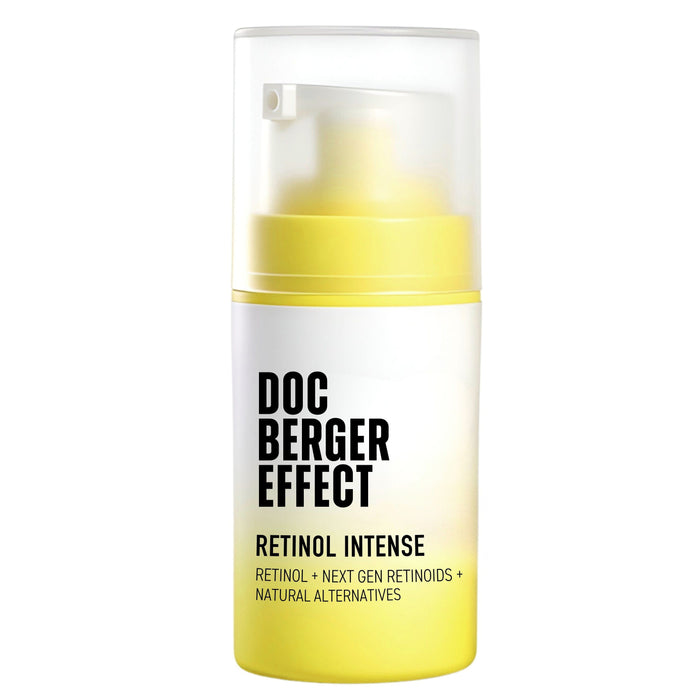
Retinol is highly effective, which is why concentration plays a key role. For beginners or those with sensitive skin, we recommend a low-concentration retinol serum that gives the skin time to get used to the active ingredient. Our Retinol Sensitive is the ideal retinol serum for beginners. Experienced users can opt for higher-concentration retinol serums, such as our Retinol Intense, to achieve more intense, targeted results. In any case, it’s best to increase the concentration gradually.
Light- and airtight packaging
Retinol is sensitive to light and oxygen. High-quality, light- and air-tight packaging protects the active ingredient from oxidation and ensures that the retinol serum remains stable and effective throughout its entire period of use. Open jars or transparent packaging are therefore less suitable for retinol.
Carefully Formulated Ingredients Instead of Unnecessary Additives
A good retinol serum isn’t defined by a long INCI list, but rather by a well-thought-out combination of effective and skin-friendly ingredients. Avoiding fragrances, parabens, silicones, irritating alcohols, and other unnecessary additives can help prevent putting unnecessary strain on the skin—especially with regular use and around the sensitive eye area.

How to Use Retinol Serum Correctly
To ensure that a retinol serum can work optimally and remains well-tolerated, proper application is crucial. Most adverse reactions are not caused by the active ingredient itself, but by incorrect application. Retinol should always be applied in the evening, as skin regeneration is particularly active overnight and the active ingredient is light-sensitive. When starting out, it’s recommended to apply the retinol serum after cleansing and to gradually incorporate it into your existing skincare routine. It’s also important to maintain a consistent daily skincare regimen, regardless of the season or weather—ideally our day cream with SPF 50+.
How often should you use retinol?
For beginners, it is recommended to start by using the product once or twice a week. Once your skin has become accustomed to the active ingredient (usually after 2–4 weeks), you can gradually increase the frequency of use.
Experienced users can also use a retinol serum more frequently, even up to once a day in the evening. The key is to give your skin enough time to adjust.
Which retinol serum is right for my skin?
There isn’t “one” retinol serum that’s equally suitable for every skin type. Retinol is a very potent active ingredient, and its tolerability and effectiveness depend heavily on the formulation, concentration, and individual skin type. Depending on your skin type, experience with retinol, and personal skincare goals, a different retinol serum may therefore be the better choice.
Retinol Sensitive – For Those New to Retinol
Retinol Sensitive was developed specifically for people who are new to retinol, have more sensitive or drier skin, or want to incorporate retinol into their skincare routine with extra care. The formula combines a low dose of retinol with skin-friendly plant-based active ingredients such as bakuchiol to gradually acclimate the skin to the active ingredient. This makes Retinol Sensitive ideal for a gentle introduction to retinol and ensures good tolerability with regular use.
Retinol Intense (High-Dose Retinol) – For Retinol Pros
Retinol Intense is designed for users who already have experience with retinol and are looking for a more intense effect. The formula contains a higher concentration of retinol combined with next-gen retinoids and phytoretinols such as bakuchiol to specifically enhance the skin-renewing effects. Retinol Intense is particularly suitable for advanced retinol routines and users who are consciously shifting their skincare regimen to a high-dose retinol serum .


Retinol Top-Rated Set
- Regular Price
- Starting at €316.00
- Asking Price
- Starting at €316.00
- Regular Price
-
€346,00
Retinol Serum – Before & After: What Are Realistic Expectations?
Not all retinol is created equal. When comparing different retinol serums, significant differences become apparent—especially between simply formulated drugstore products and highly concentrated, medically engineered formulations. Factors such as retinol concentration, stabilization, active ingredients, and packaging play a decisive role in the actual effect on the skin

Before

Afterward
After 3 months of consistent use
In an independent TV test—featured on shows such as *taff*, *SAT.1 Frühstücksfernsehen*, and *taff weekend*, among others—two different retinol serums were compared over several months: an affordable drugstore product and a highly concentrated retinol serum from DOC BERGER EFFECT. The test subject first used our retinol serum from that time, which contained 0.3% retinol, and later switched to the higher-concentration Retinol 0.5% version. In terms of their active ingredient composition, these formulations correspond to our current Retinol Sensitive and Retinol Intense serums, whose formulas have since been further developed and adapted to reflect the latest scientific findings.
Over the course of use, both subjectively perceptible and objectively measurable changes in the skin’s appearance were observed. These included, among other things, an improved skin texture and a reduction in wrinkle depth, particularly on the forehead, around the eyes (crow’s feet), and on the lower eyelids. However, such results do not occur overnight but rather through consistent use over several months. Click here for our Retinol Top Pick article.

Does a retinol serum have side effects?
Retinol side effects are temporary skin reactions that can occur as a result of accelerated cell turnover, particularly during the initial adjustment phase (retinization). These are not classic side effects in the medical sense. These symptoms, often referred to as “retinol burn,” are usually harmless and subside within a few weeks with proper dosing and gradual acclimatization.
Combining Retinol Serum with Other Ingredients
Certain ingredients can improve tolerability, enhance the product's effectiveness, or provide targeted support for the skin during retinol treatment.
Retinol & Hyaluronic Acid
The combination of retinol and hyaluronic acid is considered particularly beneficial. While retinol supports skin renewal, hyaluronic acid provides the skin with intense hydration and helps alleviate feelings of tightness and dryness. Using a retinol serum in combination with a moisturizing night cream can help stabilize the skin barrier and improve the skin’s tolerance to retinol. Hyaluronic acid is an ideal addition to a retinol routine, especially for dry or sensitive skin.


Retinol & Bakuchiol
Bakuchiol is often described as a plant-based active ingredient with a retinol-like profile and is particularly well-suited as an alternative or complementary ingredient to retinol. When used in combination with retinol, bakuchiol can help enhance skin-renewing effects while improving skin tolerance.
Retinol & Vitamin C
Because of their different mechanisms of action and pH levels, it is recommended to apply retinol and vitamin C at different times—vitamin C in the morning and retinol in the evening. This allows you to make the most of the respective benefits of both active ingredients without putting unnecessary strain on the skin.

Frequently Asked Questions About Retinol Serum
A retinol serum supports skin cell renewal and can help smooth fine lines and wrinkles, even out pigmentation, minimize pores, and combat blemishes. With regular use, the skin can appear smoother, more even, and fresher overall.
Among dermatologists, retinol is considered one of the most thoroughly researched and effective active ingredients in skincare. It is often recommended to specifically target signs of aging, pigmentation issues, and blemishes—provided it is used in the correct dosage and applied properly.
The first changes in skin texture may become visible after about 4–6 weeks. More noticeable effects, such as improvements in wrinkles or age spots, typically appear after at least 8–12 weeks of consistent use. Retinol works gradually and over the long term; it does not work overnight.
A retinol serum can be beneficial as early as your mid-20s to help prevent premature signs of aging. As you get older, retinol is often used specifically to address existing wrinkles, age spots, and a loss of skin elasticity.
Dermatologists recommend retinol serums that are formulated to be stable, have a precise concentration, and are well-tolerated. It is crucial that the retinol serum matches your skin type and your previous experience with retinol—ranging from low-dose products for beginners to high-dose variants. In a comprehensive retinol comparison test, which was featured on programs such as “taff” and “SAT.1 Frühstücksfernsehen,” dermatologist Dr. Pamela Mai provided expert guidance throughout the test. In this context, the DOC BERGER EFFECT Retinol Serum was compared to a drugstore retinol serum. Over the course of the test, DOC BERGER EFFECT Retinol demonstrated measurable improvements in skin texture, including a reduction in wrinkle depth. The well-thought-out, cleanly formulated composition and the retinol serum’s good tolerability were also highlighted.
Yes, retinol serum can also be suitable for sensitive skin, provided it’s low-concentration, free of harsh ingredients, and introduced gradually into your skincare routine. DOC BERGER EFFECT’s Retinol Sensitive, which contains bakuchiol and novoretin, is particularly well-suited for a gentle introduction.
No. Retinol does not make the skin thinner. On the contrary: With long-term use, retinol can strengthen the skin's structure and thicken the skin by promoting collagen production.
Whether a retinol serum can be used daily depends on its concentration, formulation, and how well your skin tolerates it. Many users start by applying it once or twice a week and gradually increase their usage until it becomes part of their regular daily evening routine.
Yes, a retinol serum can also be used in the summer. However, it’s important to consistently use sunscreen during the day, as retinol can make the skin more sensitive to light. A high SPF should be a regular part of your skincare routine.
Yes—absolutely! Retinol is effective regardless of gender and is also ideal for men, who often suffer from large pores, blemishes, or deep expression lines. Since men’s skin is generally thicker and produces more sebum, it benefits particularly from the pore-refining, smoothing, and anti-inflammatory effects of a retinol serum.
It’s also an ideal addition to your shaving routine, as it helps prevent clogged pores, ingrown hairs, and minor inflammation.
Yes, definitely! Retinol and vitamin C are a real dream team for your skin—but don't use them at the same time.
Our recommendation: Use the Vitamin C + Biobotox Serum in the morning—it protects against free radicals, lightens dark spots, and reduces expression lines. In the evening, use the Retinol Serum—it supports cell renewal and provides long-term benefits against wrinkles, blemishes, and large pores. This way, your skin benefits from maximum effectiveness around the clock.
Retinol and retinal both belong to the retinoid family, which includes some of the most effective active ingredients for combating wrinkles, blemishes, and an uneven complexion. Retinal (retinaldehyde) is the direct precursor to retinoic acid—which is not permitted in cosmetic products in the EU because it is classified as a pharmaceutical. Although retinal acts faster than retinol, it can be more irritating and is often less stable in cosmetic formulations. Retinol, on the other hand, is considered the more proven and better-tolerated option. It is converted into retinoic acid in the skin through two enzymatic steps, resulting in a gentle yet effective action. Retinol is therefore considered the gold standard in anti-aging skincare.
A new EU regulation has been in effect since 2025, under which retinol concentrations exceeding 0.3% may no longer be freely manufactured or sold. Since then, higher-dose retinol has been classified as a prescription drug. This regulatory change underscores once again just how effective retinol actually is as an active ingredient.
With this in mind, we have worked intensively on new formulations that come as close as possible to the effects of our existing 0.5% and 1.0% retinol serums—while offering improved tolerability and maximum safety. The result is two newly developed retinol serums:
Retinol Sensitive is similar in purpose to our previous Retinol 0.3% Serum, but it has a gentler formula and is better suited for beginners or those with more sensitive skin.
Retinol Intense is designed as a counterpart to the earlier Retinol 0.5% and 1.0% formulations. In this product, we combine the maximum permitted concentration of pure retinol with other retinoids and plant-based, retinol-like active ingredients to specifically intensify the skin-renewing effect.
This is how we ensure highly effective, modern retinol skincare even under the new regulatory framework—tailored, well-thought-out, and designed to meet a variety of skin needs.
No. Retinol and other vitamin A derivatives should be avoided during pregnancy and while breastfeeding. During this time, alternative, non-retinoid active ingredients are recommended. If you have any questions, you should always consult a healthcare professional.