BLACK FRIDAY
23–30 November Now live!
Shop now
SIGNALPEPTIDE

SIGNAL PEPTIDES

September 29 2026 – Dr. Luise Berger

1. DESCRIPTION OF SIGNAL PEPTIDES:

Signal peptides are among the most interesting ingredients in modern anti-aging skincare. These short chains of amino acids are used in cosmetic formulations as messengers and may influence certain processes in the skin.

Signal peptides are particularly relevant to the extracellular matrix, the skin’s structural framework, which includes collagen, elastin, and fibronectin.

As we age, the skin’s ability to provide important structural proteins at the same rate declines. At the same time, existing components break down more rapidly. As a result, skin gradually loses firmness and elasticity.

Signal peptides address these processes and are therefore commonly used in premium anti-aging serums and creams for mature skin.

2. EFFECTS OF SIGNAL PEPTIDES:

Signal peptides can mimic certain biological signals that tell the skin structural components are needed.

Depending on the peptide, they may support processes related to the formation or regulation of:

  • collagen

  • elastin

  • fibronectin

  • glycosaminoglycans

  • other components of the extracellular matrix

.

Signal peptides may thereby help skin, over time, to:

  • look firmer

  • gain elasticity

  • look smoother

  • make fine lines appear less visible

  • develop a denser, more resilient structure

The actual effect, however, always depends on the peptide, its concentration, the formulation, and consistent use.

3. USES OF SIGNAL PEPTIDES:

Signal peptides are primarily used in anti-aging serums, peptide serums, night creams and skincare products for mature skin.

They are especially relevant for skin showing early or more advanced signs of structural aging.

Signal peptides combine well with other groups of active ingredients, including:

  • hyaluronic acid for intensive hydration

  • retinoids to support skin renewal

  • antioxidants to help protect against oxidative stress

  • niacinamide to support the skin barrier

  • neuropeptides for expression lines

  • skin-identical lipids for a more resilient skin barrier

4. SKIN CONCERNS ADDRESSED WITH SIGNAL PEPTIDES:

  • decreasing skin firmness

  • loss of elasticity

  • fine lines and wrinkles

  • mature skin

  • visible collagen loss

  • uneven or less firm skin texture

  • dry, thinner-looking skin

  • early signs of skin aging

WHAT ARE SIGNAL PEPTIDES?

Signal peptides are short chains of amino acids that can act as information or signaling molecules within biological systems.

In skincare, certain peptides are used to imitate the skin’s natural signaling processes.

One particularly interesting principle involves so-called matrikines. These are peptide fragments that can arise from components of the extracellular matrix.

When collagen breaks down, for example, smaller fragments form. In simplified terms, some of these fragments can signal to the skin that structural material has been damaged and needs replacing.

Modern cosmetic signal peptides draw on this principle.

They are developed to imitate certain natural peptide sequences and may thereby support processes linked to the renewal or stabilization of the skin matrix.

HOW DO SIGNAL PEPTIDES WORK ON THE SKIN?

Our skin consists of more than the skin cells we can see.

An essential part of its firmness lies deeper: the extracellular matrix.

It forms a complex network of collagen, elastin, fibronectin, glycosaminoglycans, and other molecules.

This network plays a major role in how our skin appears:

  • firm
  • elastic
  • smooth
  • resilient

.

This balance shifts with age. New collagen forms more slowly while existing collagen breaks down more rapidly. External factors such as UV exposure and oxidative stress can accelerate this process further.

Signal peptides were developed to target certain processes within this system.

They have been associated, among other things, with activating dermal fibroblasts and supporting the synthesis of various components of the extracellular matrix.

SIGNAL PEPTIDES AND COLLAGEN: WHY IS THE CONNECTION SO INTERESTING?

Collagen is one of the skin’s most important structural proteins.

It forms a dense framework in the dermis and contributes substantially to firmness and resilience.

Collagen levels decline with age. At the same time, existing collagen is increasingly damaged by various enzymes and environmental factors.

That is why supporting collagen structure plays a central role in anti-aging skincare.

Certain signal peptides may stimulate processes related to the formation of collagen and other matrix components.

They do not supply the skin with ready-made collagen; they act one step earlier, at the level of cellular communication.

This makes signal peptides a particularly interesting component of modern peptide skincare.

THE BEST-KNOWN SIGNAL PEPTIDES IN SKINCARE

Not every peptide is a signal peptide.

Depending on their mode of action, cosmetic peptides are classified as signal peptides, neuropeptides or peptides that influence neurotransmitters, carrier peptides, and enzyme-inhibiting peptides, among other categories.

Some of the best-known signal peptides include:

PALMITOYL TRIPEPTIDE-1

Palmitoyl Tripeptide-1 is among the best-known signal peptides in anti-aging skincare.

It is based on the amino acid sequence glycine-histidine-lysine, or GHK, and is linked to palmitic acid.

This lipid component increases the molecule’s oil solubility and was developed to improve its use in topical formulations.

Palmitoyl Tripeptide-1 is used as a so-called matrikine-like signal peptide.

It is associated in particular with processes involving the extracellular matrix and collagen structure.

Palmitoyl Tripeptide-1 is especially well known as a component of Matrixyl® 3000.

PALMITOYL TETRAPEPTIDE-7

Palmitoyl Tetrapeptide-7 is another widely used cosmetic peptide.

It is often used together with Palmitoyl Tripeptide-1.

This combination is particularly well known as the active ingredient complex Matrixyl® 3000.

Besides its role in peptide formulations, Palmitoyl Tetrapeptide-7 is associated with inflammatory signaling pathways.

This is of particular interest in anti-aging care because chronic low-grade inflammation may affect the extracellular matrix over time.

Independent clinical evidence for individual cosmetic peptides is not always as extensive as marketing claims suggest. Some of the available data on Palmitoyl Tetrapeptide-7 come from patents and manufacturer information.

MATRIXYL® 3000

Matrixyl® 3000 is one of the best-known peptide complexes in modern anti-aging skincare.

The complex combines:

Palmitoyl Tripeptide-1
and
Palmitoyl Tetrapeptide-7

This brings together different signaling pathways in the skin.

Cosmetic research associates Matrixyl® 3000 with processes involving collagen, elastin, fibronectin, and other components of the extracellular matrix.

The complex is therefore particularly suitable for skin that shows:

  • decreasing firmness
  • more visible fine lines
  • loss of elasticity
  • a thinner- or less dense-looking structure

PALMITOYL PENTAPEPTIDE-4

Palmitoyl Pentapeptide-4 is another classic signal peptide.

The ingredient was originally known as Matrixyl® and consists of a palmitoylated peptide sequence.

It is associated with increased formation of various extracellular matrix components, including collagen, elastin, and fibronectin.

Palmitoyl Pentapeptide-4 is therefore mainly used in products targeting visible signs of structural skin aging.

PALMITOYL TRIPEPTIDE-5

Palmitoyl Tripeptide-5 is another well-known signal peptide.

It was developed to imitate or influence processes involving the TGF-β signaling pathway.

TGF-β plays an important role in regulating the extracellular matrix and collagen synthesis, among other processes.

Palmitoyl Tripeptide-5 is therefore used mainly in anti-aging products targeting firmness, elasticity, and wrinkles.

Here too, the evidence should be assessed realistically: the mechanism is biologically plausible and has been studied preclinically, but independent human clinical data are more limited than for some established cosmetic ingredients.

BENEFITS OF SIGNAL PEPTIDES IN SKINCARE

SIGNAL PEPTIDES FOR COLLAGEN LOSS

The primary use of signal peptides is caring for skin whose structural firmness is declining.

By imitating natural signaling mechanisms, certain peptides may support processes related to the extracellular matrix.

This makes them particularly interesting for mature skin.

SIGNAL PEPTIDES FOR WRINKLES

Wrinkles result from a complex interaction of different factors.

These include:

  • collagen breakdown
  • loss of elasticity
  • UV damage
  • lack of moisture
  • repeated facial expressions
  • oxidative stress

Signal peptides address the structural aspect of these processes in particular.

They are therefore especially interesting when the goal is not merely to plump skin temporarily but to support its structure over time.

SIGNAL PEPTIDES FOR FIRMER-LOOKING SKIN

Collagen, elastin, and other matrix components largely determine how firm skin feels and how taut it appears.

Signal peptides are therefore often used in formulations designed to improve the look of firmness and elasticity.

These effects do not happen overnight.

Structural changes in the skin take time and consistent use.

SIGNAL PEPTIDES FOR MATURE SKIN

Mature skin usually undergoes several changes at once.

It often becomes drier and thinner and loses elasticity. At the same time, its ability to regenerate declines.

Signal peptides are therefore particularly well suited to complex anti-aging formulations that combine them with moisturizers, antioxidants, and ingredients that support the skin barrier.

SIGNAL PEPTIDES VS. NEUROPEPTIDES: WHAT IS THE DIFFERENCE?

Signal peptides and neuropeptides both belong to the broad family of cosmetic peptides, but work through different approaches.

Signal peptides
primarily address processes of cellular communication and the extracellular matrix. They are used in particular to support collagen structure, elasticity and skin firmness.

Neuropeptides, or neuroactive peptides
by contrast, address processes involved in neuronal or neuromuscular signaling and are particularly interesting for expression-related wrinkles.

Put simply:

Signal peptides → structure and collagen

Neuropeptides → facial movement and expression lines

The two peptide classes can therefore complement each other in a comprehensive anti-aging routine.

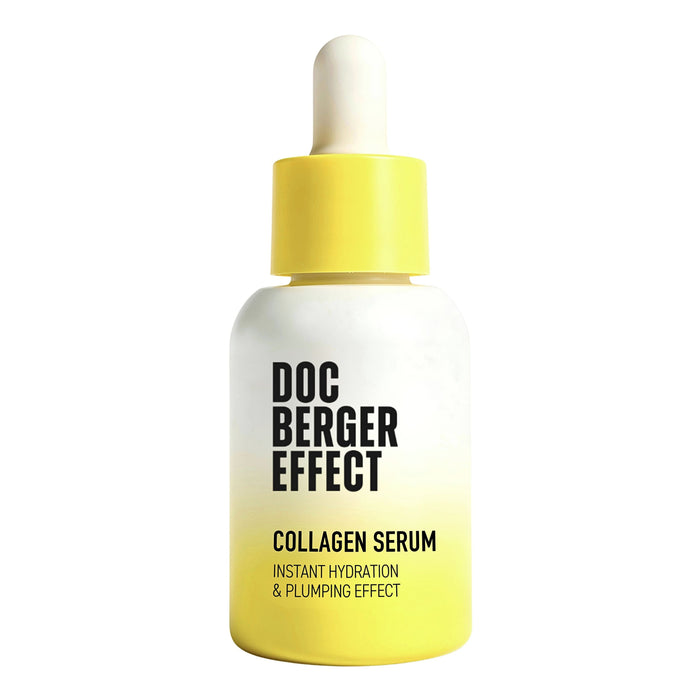
MATRIXYL® 3000 IN DOC BERGER EFFECT COLLAGEN SERUM

The DOC BERGER EFFECT Collagen Serum specifically features Matrixyl® 3000 and thus the two signal peptides Palmitoyl Tripeptide-1 and Palmitoyl Tetrapeptide-7.

This combination was developed to support processes associated with the skin matrix and collagen structure.

The signal peptides are complemented by soluble collagen, Centella Asiatica, amino acids, inositol, betaine and green tea.

The serum therefore addresses several common needs of mature and dry skin at once:

  • declining firmness
  • loss of elasticity
  • lack of moisture
  • fine dehydration lines
  • skin that appears less plump

While Matrixyl® 3000 provides the targeted peptide component of the formulation, collagen and betaine support moisture retention. Centella and amino acids complement the care of skin structure.

The Collagen Serum thus combines signal peptide technology with intensive hydration and is aimed particularly at skin that is losing resilience and natural fullness.

ULTRA RICH NIGHT CREAM WITH MATRIXYL® 3000

The DOC BERGER EFFECT Ultra Rich Night Cream also contains the signal peptides Palmitoyl Tripeptide-1 and Palmitoyl Tetrapeptide-7.

This rich night care combines Matrixyl® 3000 with several other ingredient strategies.

Squalane, avocado oil and skin-identical lipids strengthen the skin barrier, while different forms of hyaluronic acid support the skin’s moisture reserves.

Matrixyl® 3000 adds a targeted peptide approach to support skin structure and firmness.

The Ultra Rich Night Cream also contains the advanced ingredient Juvinity™ as well as ectoin, amino acids and green tea.

This makes the formulation particularly suitable for:

  • dry skin
  • mature skin
  • loss of elasticity
  • declining skin firmness
  • a weakened skin barrier
  • fine lines and dehydration lines

The Ultra Rich Night Cream thus combines signal peptides, intensive lipid care and hydration in a comprehensive night treatment.

PLATINUM ELIXIR WITH MODERN SIGNAL PEPTIDE TECHNOLOGY

The DOC BERGER EFFECT Platinum Elixir takes a particularly complex peptide approach.

The formulation contains Acetyl Tetrapeptide-59 Amido Ethoxyethoxyacetyl Dipeptide-67 as part of a modern platinum-peptide complex.

The serum also contains Clarivine™ derived from grape flower stem cells. This ingredient complex provides signal peptides and other botanical components.

This peptide technology is combined with colloidal platinum, hyaluronic acid, lycopene, niacinamide, aloe vera and panthenol.

Unlike classic Matrixyl® formulations, Platinum Elixir therefore does not focus exclusively on collagen.

Instead, it takes a broader approach to:

  • skin firmness
  • elasticity
  • hydration
  • the skin barrier
  • antioxidant protection
  • long-term skin quality

Platinum Elixir is therefore particularly suited to demanding, mature or stressed skin and adds a modern skin longevity approach to classic signal peptides.

BUYING SIGNAL PEPTIDES: WHAT SHOULD YOU LOOK FOR?

If you want to buy signal peptide skincare, look beyond the word “peptides” on the packaging.

What matters is which peptides the product actually contains.

For example, look for INCI names such as:

  • Palmitoyl Tripeptide-1
  • Palmitoyl Tetrapeptide-7
  • Palmitoyl Pentapeptide-4
  • Palmitoyl Tripeptide-5

The overall formulation is just as important.

The cosmetic benefits of signal peptides do not exist independently of the product. They depend on a complex system involving ingredient concentration, stability, the delivery system, and other ingredients.

Skin penetration is a particular challenge for peptides.

Formulations that combine signal peptides with complementary ingredients therefore make sense, for example:

  • hyaluronic acid
  • antioxidants
  • niacinamide
  • barrier lipids
  • retinoids
  • other peptide classes

HOW DO YOU USE SIGNAL PEPTIDES?

Signal peptides are typically used in serums or creams.

Depending on the product, they can be applied in the morning and/or evening.

One possible routine looks like this:

Morning:
Cleanser → toner → signal peptide serum → additional serums → day care with a high SPF

Evening:
Cleanser → toner → signal peptide serum → night care with peptides and lipids

Signal peptides can generally be combined well with other anti-aging ingredients.

In a long-term anti-aging routine, peptides, hyaluronic acid, retinoids, antioxidants, and consistent sun protection can complement one another.

WHEN CAN YOU SEE THE EFFECTS OF SIGNAL PEPTIDES?

Signal peptides are not conventional instant-action ingredients.

While hyaluronic acid may make skin feel plumper quickly by binding moisture, structural processes in the skin take considerably longer.

Results should therefore be assessed over several weeks.

The degree of any effect depends on the peptide, its concentration, the overall formulation, and your individual skin condition.

Consistency and a long-term skincare routine are therefore essential.

ARE SIGNAL PEPTIDES BETTER THAN RETINOL?

Signal peptides and retinol should not be treated as direct competitors.

They have different modes of action.

Retinoids influence many skin-renewal processes and are among the most extensively studied anti-aging ingredients.

Signal peptides focus more on specific signaling pathways and processes in the extracellular matrix.

In a well-designed anti-aging routine, these ingredient groups can therefore complement each other.

Sensitive skin may also benefit from the fact that peptide formulations can often be used without the adjustment period typical of stronger retinoids.

SIGNAL PEPTIDES IN SKINCARE: THE TAKEAWAY

Signal peptides are among the most interesting ingredient classes in modern anti-aging skincare.

Their distinctive approach is not simply to plump the skin temporarily but to address cellular communication processes related to collagen, elastin, and other components of the extracellular matrix.

The best-known signal peptides include Palmitoyl Tripeptide-1, Palmitoyl Tetrapeptide-7, Palmitoyl Pentapeptide-4, and Palmitoyl Tripeptide-5.

DOC BERGER EFFECT uses this signal peptide technology in several products:

Collagen Serum combines Matrixyl® 3000 with collagen, amino acids, Centella Asiatica, and intensive hydration. It is particularly aimed at dry and mature skin with declining firmness.

Ultra Rich Night Cream combines Matrixyl® 3000 with skin-identical lipids, hyaluronic acid, squalane, avocado oil, and Juvinity™, supporting both the skin barrier and skin structure overnight.

Signal peptides are clearly distinct from neuropeptides: while neuropeptides particularly address expression lines, signal peptides focus more on skin structure, collagen, and elasticity.

If you want to buy signal peptide skincare for your face, focus less on having as many peptides as possible and more on the right peptide class, a thoughtful overall formulation, and consistent use.